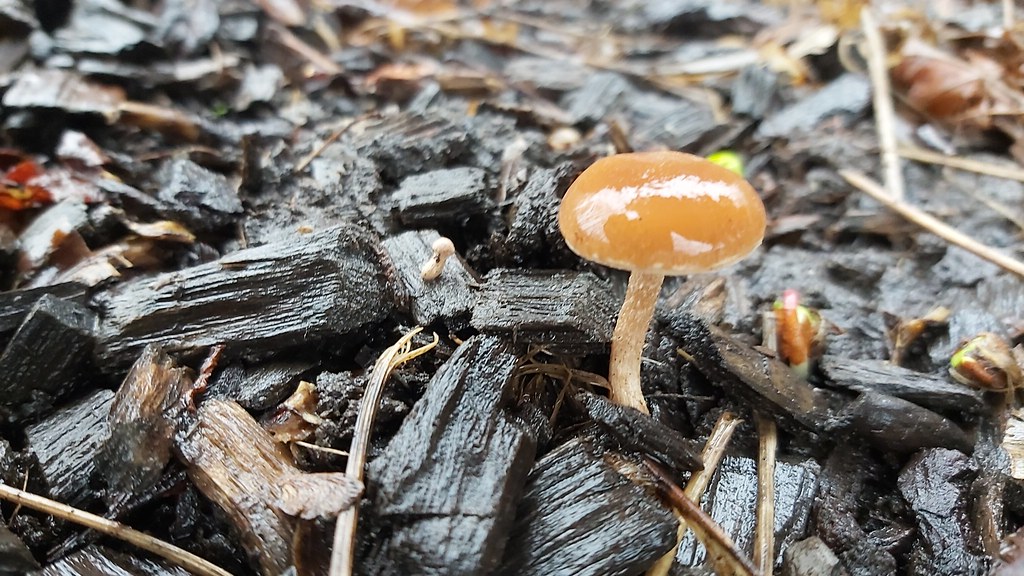
I’ve always had a passing interest in mushrooms, and when I say “passing” I mean “oh look there’s a mushroom, take a photo, it looks amazing, what is it, I don’t know, anyway let’s focus on more important things.” That is, I would certainly stop to observe ones that I would happen upon, make a point of prodding them, maybe even petting the friendlier-looking ones (shaggy inkcaps for the most part), but that was about it.
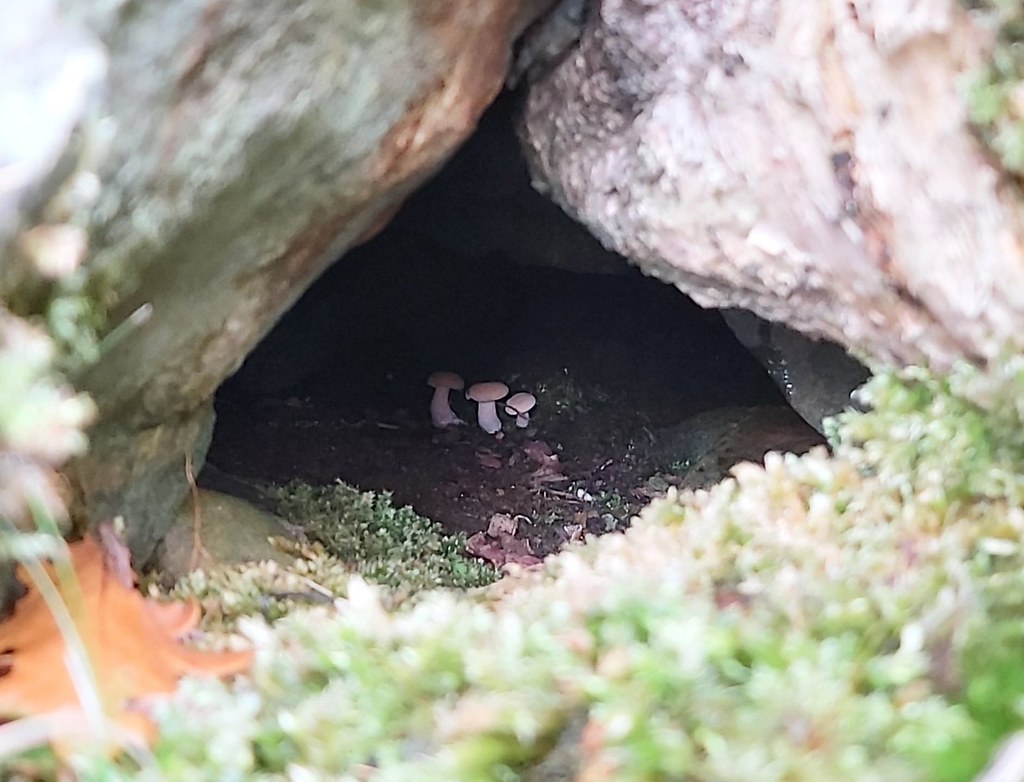
We once found mushrooms in the garden when I was about ten years old, and very excitedly, I tried to identify them – I had no means by which to do so (it was the 90’s, nothing was online, and the local library had very little). Growing up in France, there was always the option to take them to the local pharmacist, but even she was unable to figure out what they were. Perhaps it was a long shot – pharmacists (like, actual pharmacists, not the sales staff at pharmacological shops) would likely have training to recognise the common edibles, as well as common poisonous species and genera, as part of toxicology training. They would have been by no means be mushroom experts, as I realise just presently. Nowadays, you wouldn’t even really find a high street pharmacy that would give you the time of day if you waltzed in with a basket of cappy fellows…
Yucky “mushrooms”
In parallel, I had never liked “mushrooms” culinarily: I’d pick them out or outright refuse to eat a dish containing them for their…. distinct aroma. Portobello, cremini, button, or brown, I disliked them all. It was only during a trip to Japan when, faced with the prospect of not having anything else to eat from dawn til dusk did I make peace and accept to eat a chanko nabe heavily featuring enoki. And I found to my surprise that they were pretty much alright… I ate a fair other few things on that trip (fishy pork ramen, lots of pickled/preserved greens, chicken heart, the sickeningly sweet experience of yoshoku-style dishes…) and came back with a very changed palet.
Last summer I gradually discovered a liking for “edible black fungus” at a Chinese hotpot place, and I was introduced to the much more satisfying oyster mushroom. I was further spurred on in my discovery that supermarket mushrooms amount to what I can only call one fact short of a lie:
Cremini, portobello, brown, and button mushrooms are ALL the same species of mushroom. The exact species at different stages of growth or from different cultivation methods : Agaricus bisporus. It turns out, I didn’t like A. bisporus . These days I try a little exchange when eating out:
- Me: “Can you tell me about this dish?”
- Waiter: “It’s a lovely dish of pasta with a mushroom sauce.”
- Me: “Oh, what kind of mushrooms?”
- Waiter: “It’s… mushrooms?”
That might sound pernickety to some, but it’s pretty much the equivalent of this:
- Me: “Can you tell me about this dish ?”
- Waiter: “It’s a lovely dish of pasta with a meat sauce.”
- Me: “Oh, what kind of meat ?”
- Waiter: “It’s.. meat ?”
A path to learning
Nevertheless, my eyes now open to the varieties of mushrooms, I found myself wanting to find out a bit more.
We signed up to a workshop run by Rhyze Mushrooms in Edinburgh and learned the rudimentaries of innoculation of a basic subtrate, packing it, and took home a bucket each of little pet mushroom growkits, that I managed to ignore and that Gata ended up being the primary caregiver thereof. We got a small flush after a few weeks, but perhaps because of how we keep our flat (ventilated and cool), we couldn’t really give the mushrooms much of a temperature drop to cause proper pinning to commence.
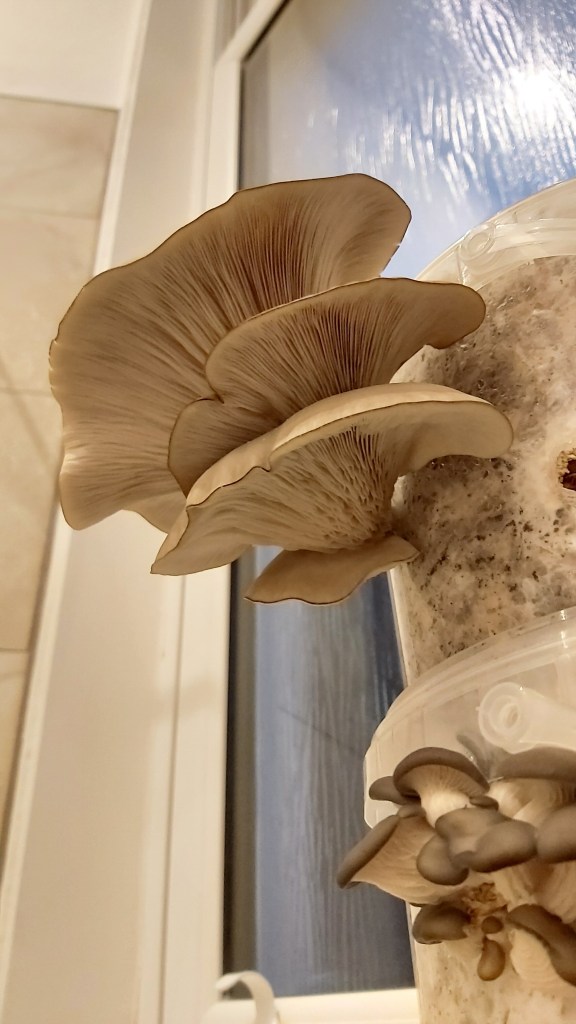
That was pretty much that, maybe growing mushrooms at home just wasn’t for us – especially since I was probably not going to have the attention span to look after them… In the wild, I was becoming more keen to look out for them on walks. And when you start opening your eyes to them… they pop up everywhere. I’m pretty sure I went on many a walk and never noticed a single one, but now I cannot help but spot them.
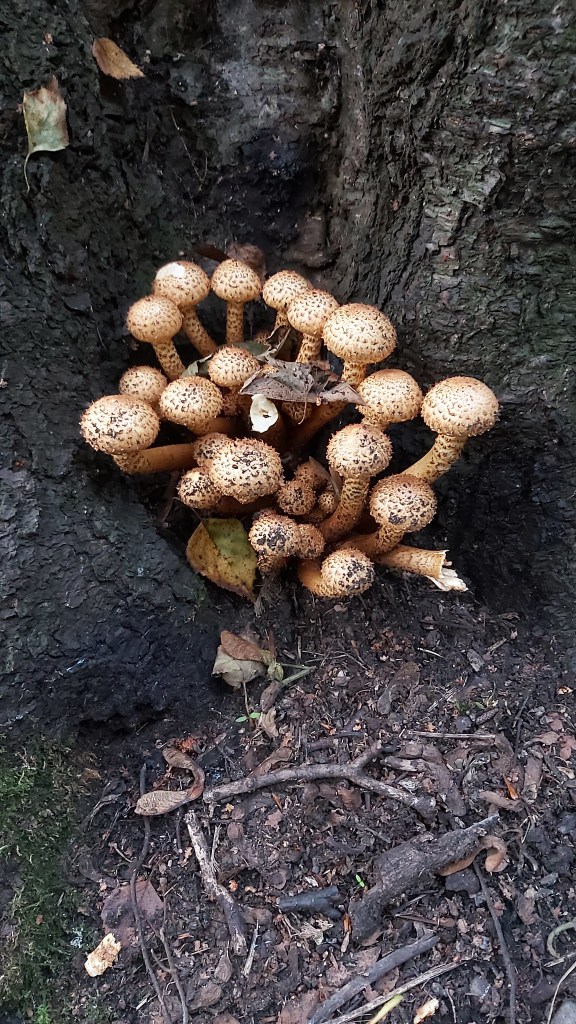
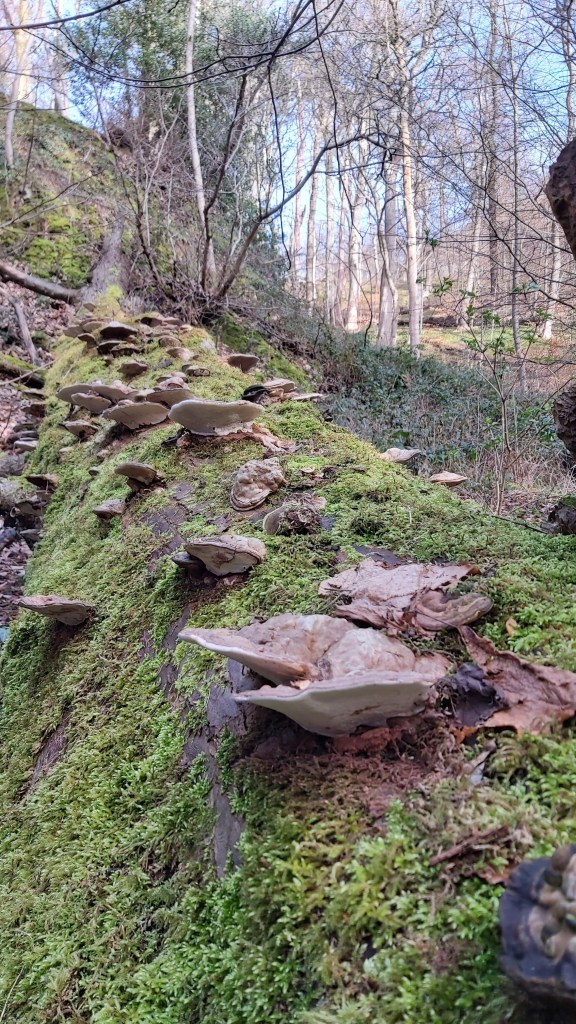
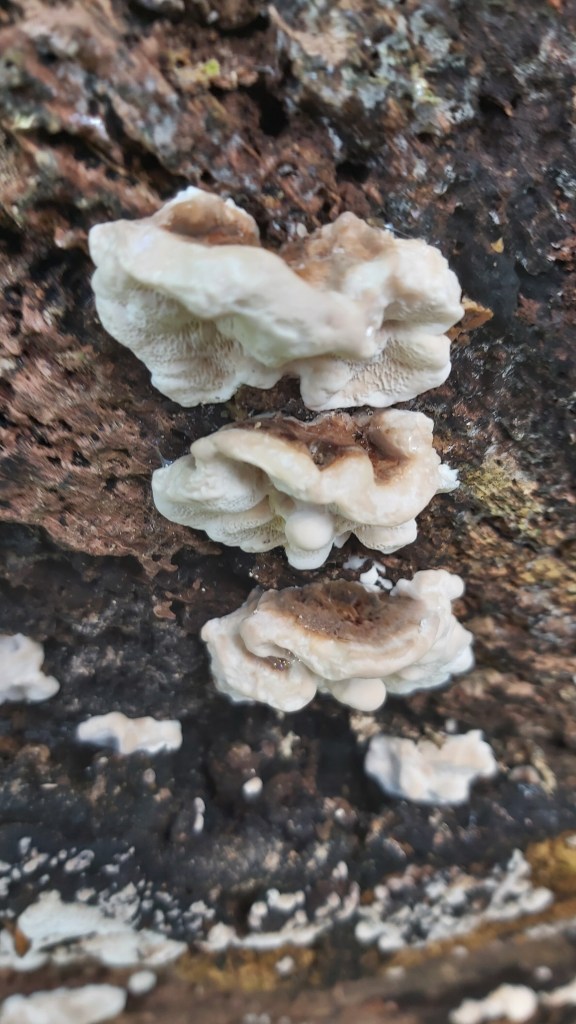
In the summer we cam across this whopper:
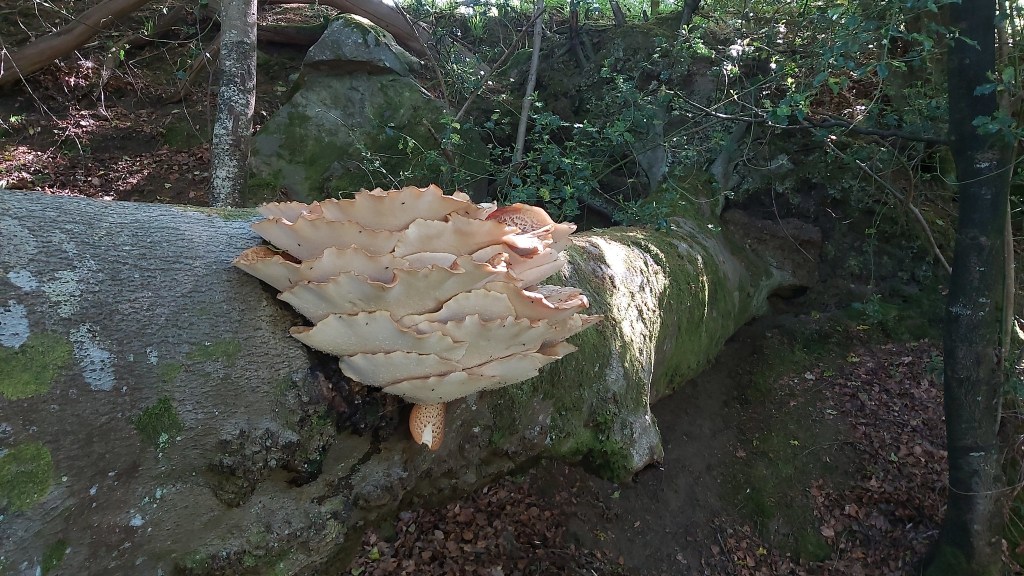
I didn’t know it at the time, but this is a Dryad’s Saddle, (Cerioporus squamosus) an edible species, though preferable in its younger stage – too big and old and it proves to be a maggot hotel.
Last November though, we watched as many have now done Fantastic Fungi on Netflix one idle evening and became just that much more intrigued about the whole topic. It does feel like that one documentary seems to have kicked off general fascination in the public about mushrooms, the topic seems to be booming, and I occasionally hear persons in passing mention “Fantastic Fungi”. That or I have become just that much more attuned to them.
The notion that the fungal mycelia in the world are not only more vastly spread than we could have imagined, but finding also that they are intrinsically key to whether a plantation of trees thrives or survives, was an eye-opener.
I have since dived right into the topic. After consulting the Intertubes, I ordered three books:
- Mushrooms, Roger Phillips, 2nd ed
- Mushrooms, Patrick Harding, Collin’s Gem
- Collins Complete Guide to British Mushrooms and Toadstools, Paul Sterry
After a few months now poring over these multiple times over, I have chosen to remove the Sterry book from my library. It feels rather haphazard in layout, and lacks a key crucial identification trait: it mentions nothing of seasons for any of the mushrooms.
Harding’s pocket book is great for having something whilst out on the go for the common varieties, and is small enough that it can just be carried at all times, to help simmer the obsession.
Phillips’s tome is more of a desk reference than a field guide – I can only take it with me when I have my bigger adventure bag on me, so now remains largely confined to home quarters. It is however comprehensive, save for one specimen I noted to be missing: there is no mention of Galerina marginata, which I thought was a pretty bad omission since it does seem to occur in the UK and is a noted lookalike for the popular Velvet Shank, Flammulina velupites.
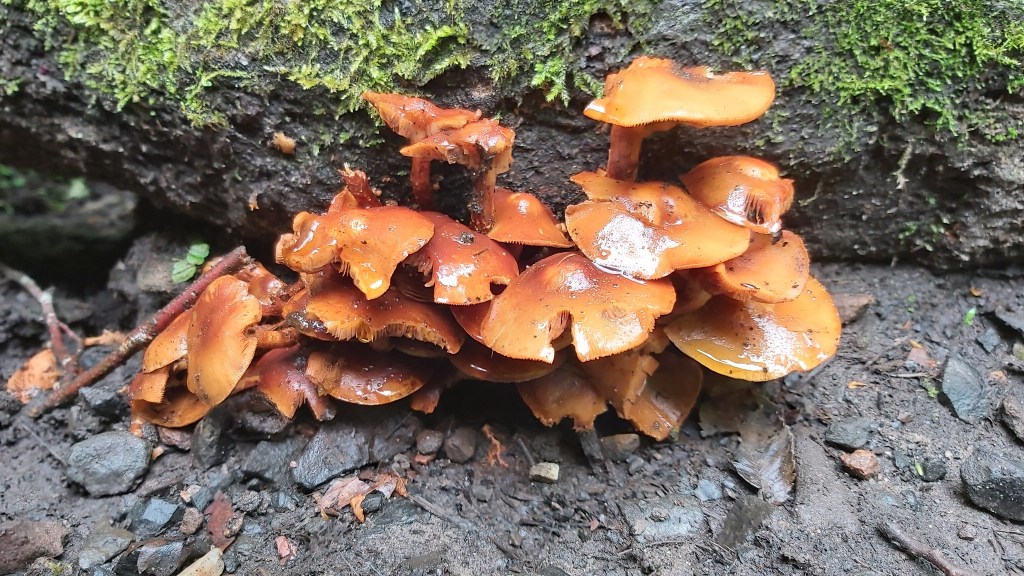
I have also taken to watching nearly (I think) every video posted by Wild Food UK, and their website’s Mushroom Guide has proven to be most excellent – erring towards caution, they go lengths to point out responsible foraging practices, flag up lookalikes, give helpful tips for identification, and remind every time that their notes are UK-specific. Many sites do have a bad habit of not signposting their regional relevance, and lead to a false sense of security that all mushroom advice is universal. It isn’t.
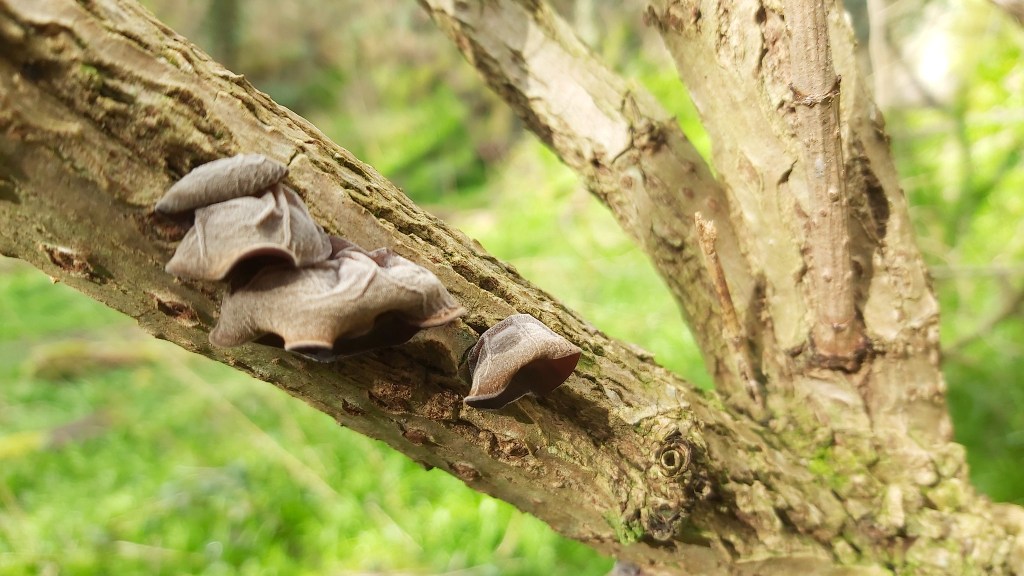
Other channels I have taken to fine-combing include UK Wildcrafts , and Danni in the Wild . The wider foraging aspect of all three have led me to investigate several other plants of interest, and whilst I don’t expect to forage for subsistence, it has brightened my woodland and countryside walks immensely. Another resource I have come to very much appreciate is First Nature’s site, which is also friendly and informative (if “vintage” in its aesthetic – a quality that I actually appreciate!).
I’ve walked and recognised oak mazegill and hoof fungus immediately; I’ve foraged for, and stir-fried, jelly ears and wild garlic, made hawthorn leaf and forsythia flower infusions; spotted many a mushroom I have no idea of in identity, and still stay on the lookout for ribwort and boradleaf plantain, especially as when summer comes along, I want to test them to see just how effective they might be at sorting out my hayfever…
As it turns out, Gata is much better at noticing a lot of them (many of the finds she has pointed out to me before I noticed), and the forsythia was from her knowledge !
I have found that exercising the doodling pen has also been helpful, as well as an additional enjoyable passtime: not only do I come away with some satisfying little pictures, but taking the time to observe and attempt to reproduce signature shapes and features helps in learning identification altogether.
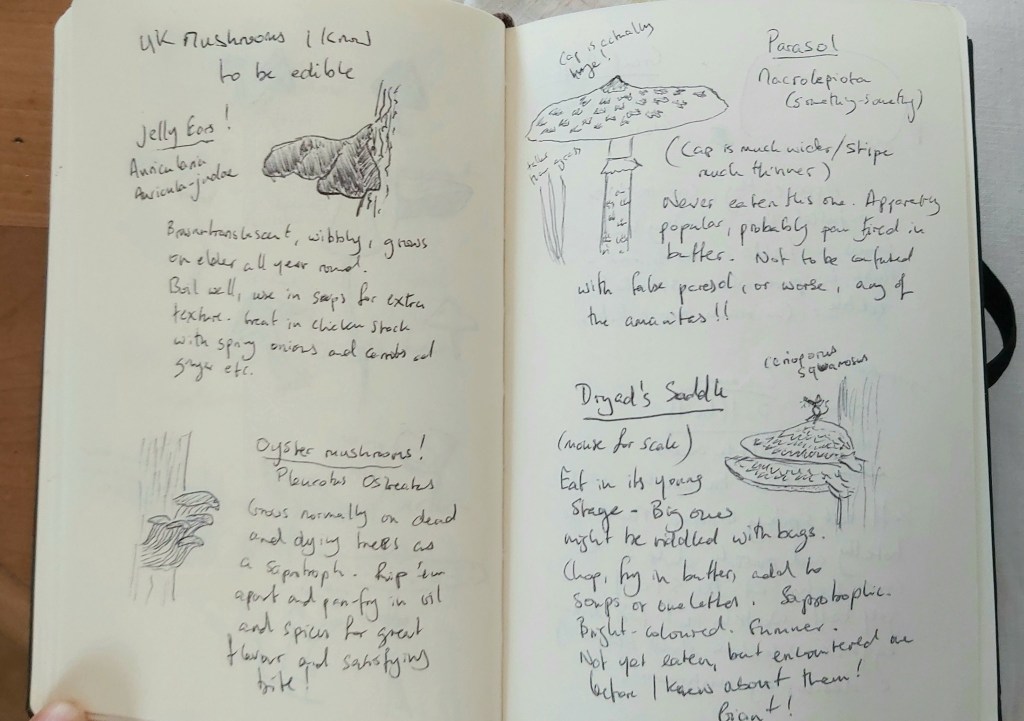
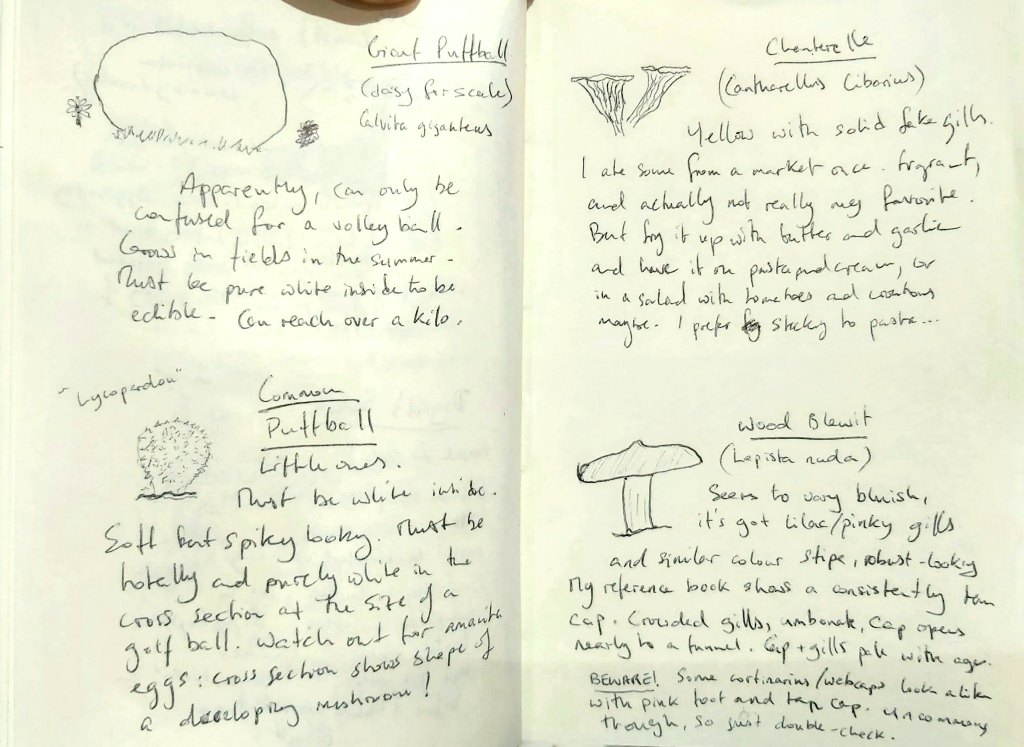
I continue to educate myself in the meantime , with a copy of Forager’s Calendar by John Wright , and Wild Food UK’s two books, one on Foraging in general, and one on Mushrooms in particular. In this topic, I have found that good old books and well-known authors are a better bet than the Internet – anyone can post a photo and claim an identification, pollute search results, and misinform The Algorithm and, if one is intending to eat wild mushrooms and plants (which I am), knowledge of context is paramount for staying alive. A video by Atomic Shrimp makes a good case: whilst an app may be as good as good as any human on visuals alone, knowledge of the context, the season, the temperature, the weather conditions of the past few days, and many other factors come in to play. I use Picture This for casual identification, but I continue to rely on the knowledge built up by extensive reading and cross-comparing to narrow down further, look for caveats and signposts about lookalikes, and balance out what different sources say about in/edibility of specific items. An apparently well-known saying goes:
“There are experienced foragers, and brave foragers, but no brave and experienced foragers.”
I take this to heart.
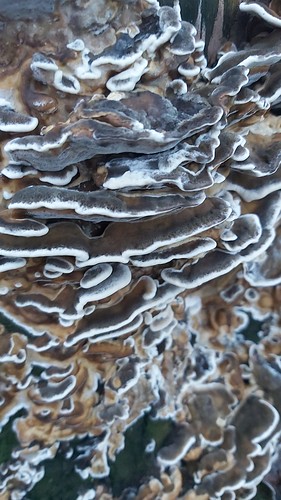
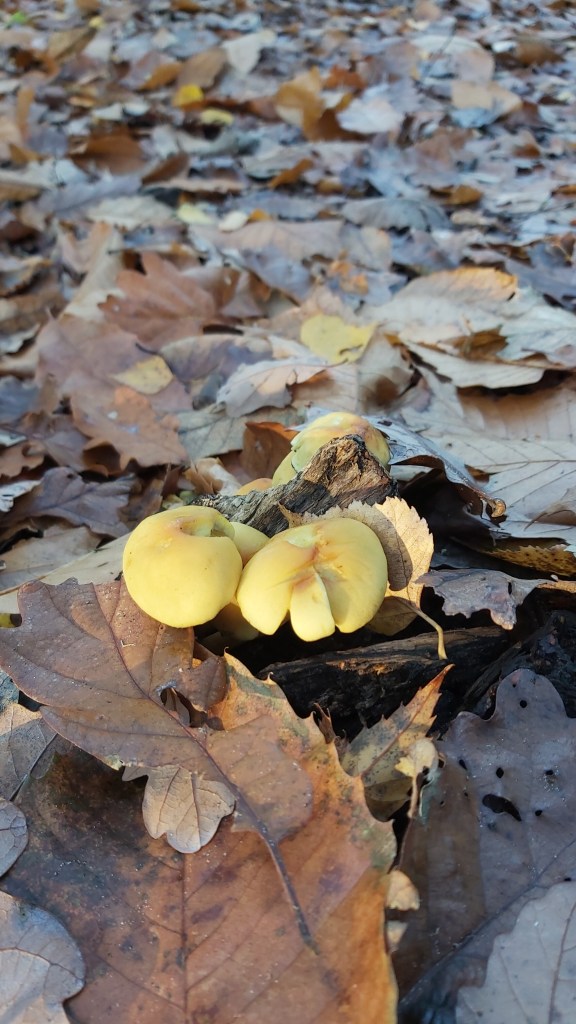
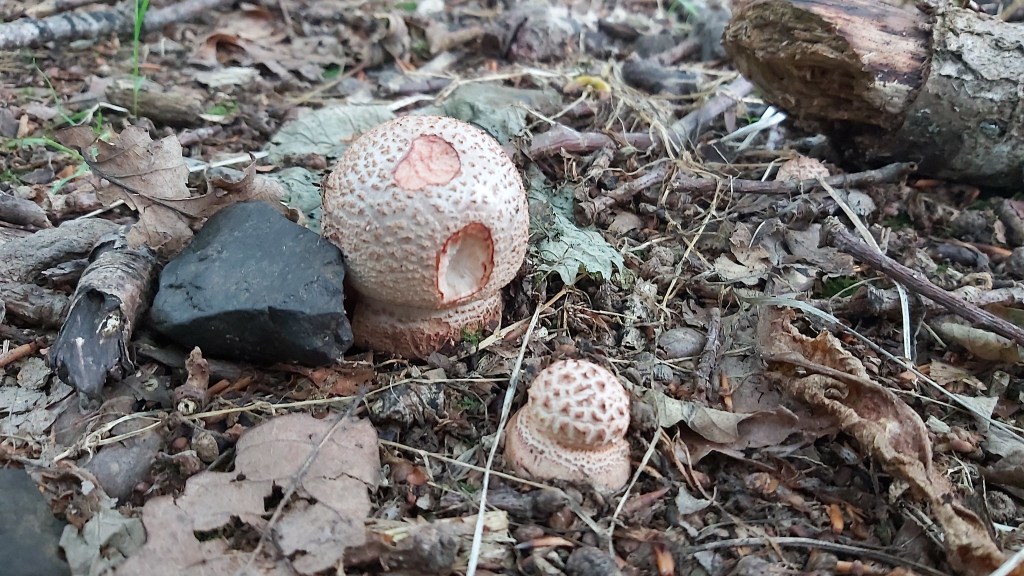
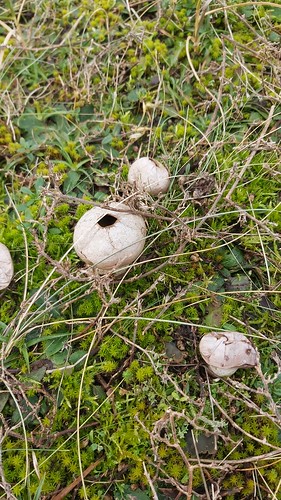
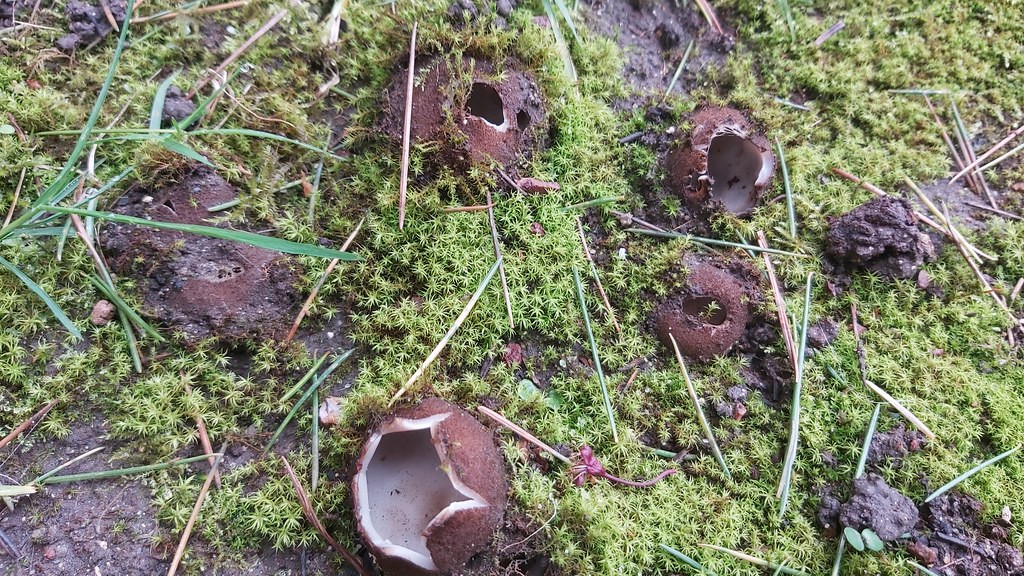
And if you’ve ever seen these 👇… know that they too are mushrooms, Geopora spp. , which I found dotting the soil at the bottom of a block of flats. The word is fascinating right from the doorstep.
🍄
 Hero of Thyme
Leave a comment